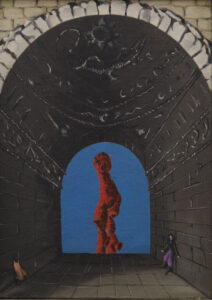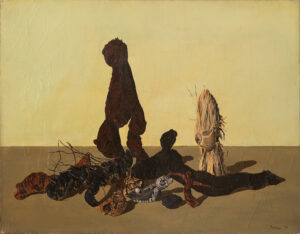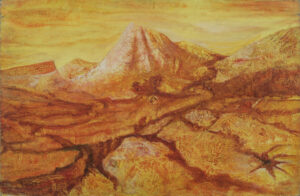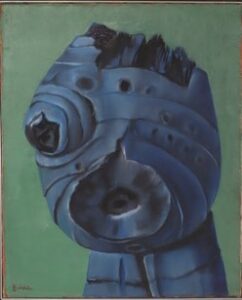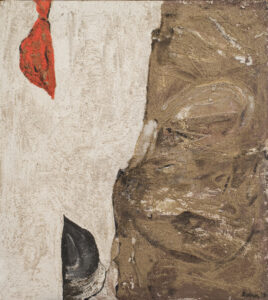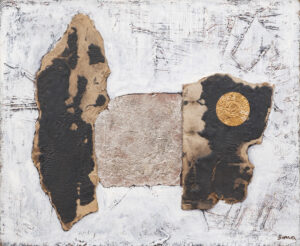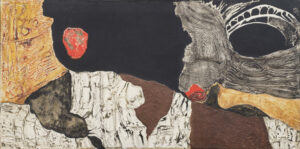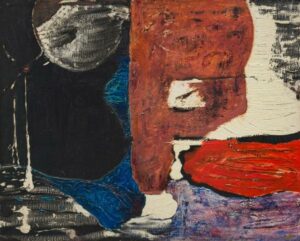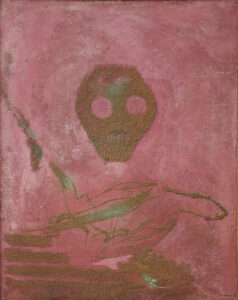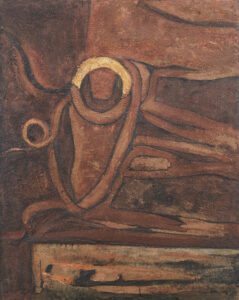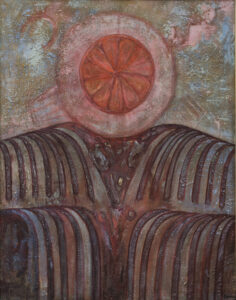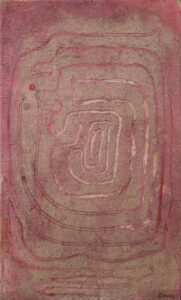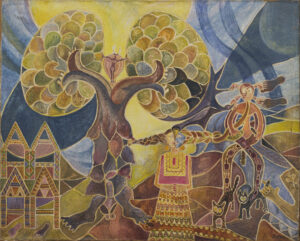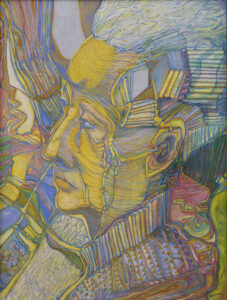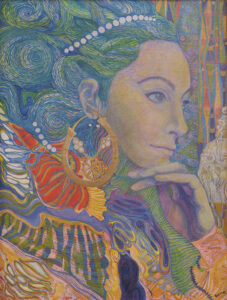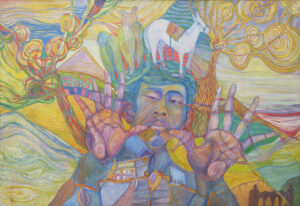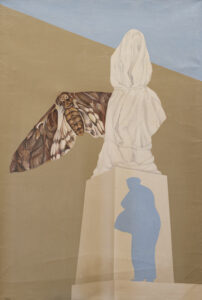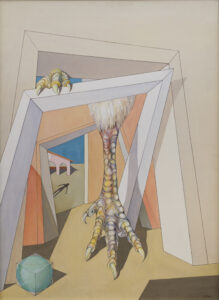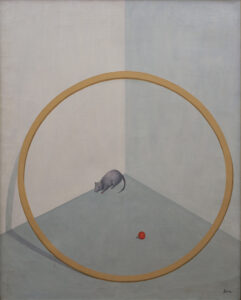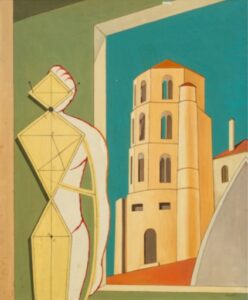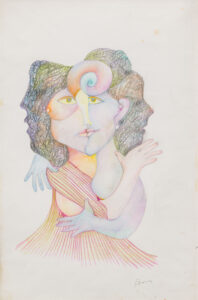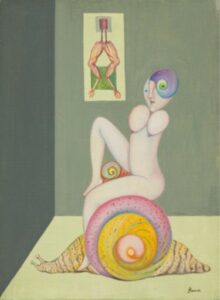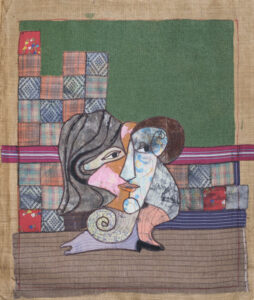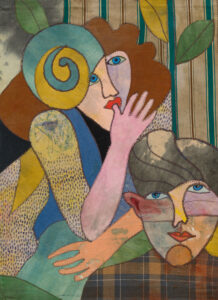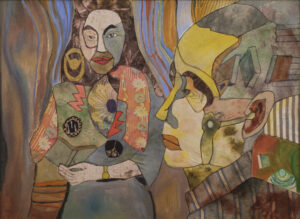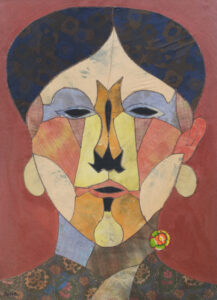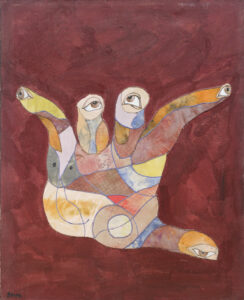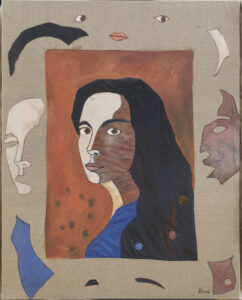
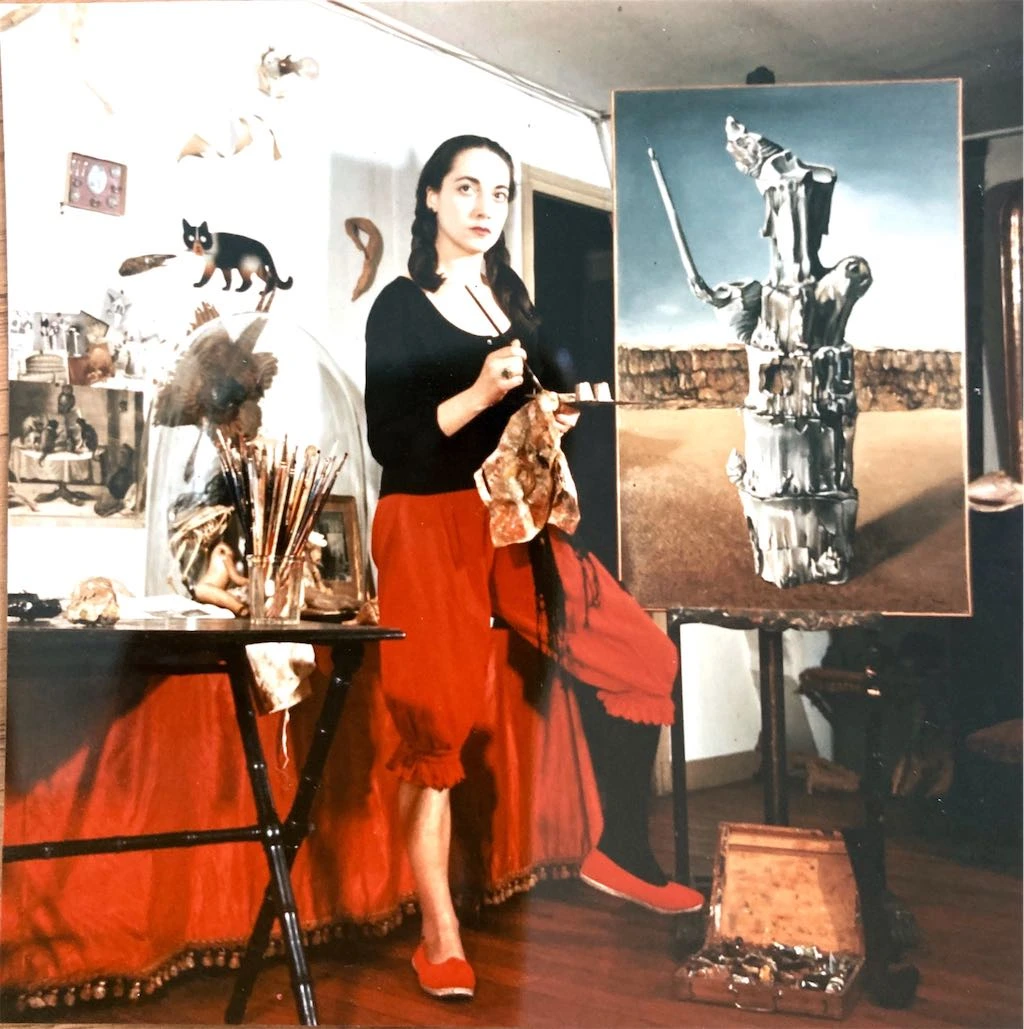
The work of Bona springs from a quest for self-discovery that finds, in the themes of metamorphosis, animal totemism and the fantastical, the means to express a divided and fragmented identity. “My research is alchemical,” the artist said. “I want to make gold out of excrement.”
Niece and pupil of Filippo de Pisis, Bona studied at the Accademia di Belle Arti in Venice before following her uncle to Paris in 1947. There she married the critic and writer André Pieyre de Mandiargues, who introduced her to Surrealist circles and helped steer her artistic interests towards magical, dreamlike, eros and the occult.
Initially influenced by de Pisis, Bona Bona creates paintings that open up space for the depiction of a fantastical world in which anthropomorphic roots - inspired by those she found on the solitary beaches of Sardinia - become the symbols of a reality in transformation.
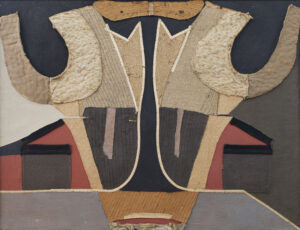
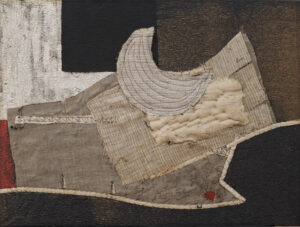
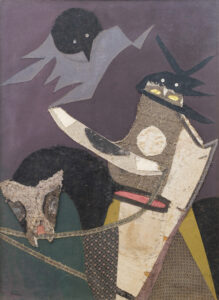
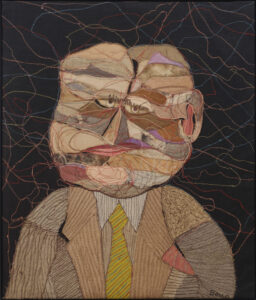
In 1958 she turned to evoking a magmatic fermenting universe in abtract heavely textured canvases, but she quickly developed a more personal language through the technique of textile assemblages: she salvaged linings and padding from old clothes, which gave raise to dreamlike compositions sewn and mounted on canvas.
A long stay in Mexico and her separation from her husband opened a new phase, rich in references to the cultures she encountered on her journeys to Latin America, India, Afghanistan, Ceylon and Nepal.
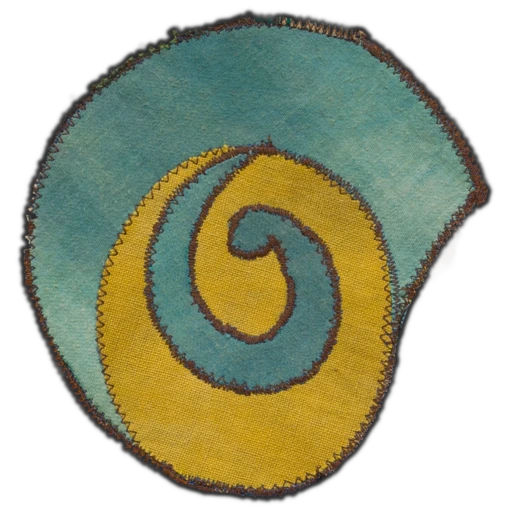
In 1967 she was reconciled with Mandiargues, and their daughter Sibylle was born. She returned to painting producing a series of neo-metaphysical works, while further developing her assemblages, now centred on her totemic animal, the snail.
Bona was also a poet and writer, author of the short story La Cafarde (1977), of autobiographies Bonaventure (1977) and Vivre en herbe (published posthumously in 2001), of poetry collections I lamenti di Serafino (1985) and À moi-même (1988).